
Buying Commercial Vehicles and Ex-Fleet Vans at Auction: WhatTrade Buyers Need to Know
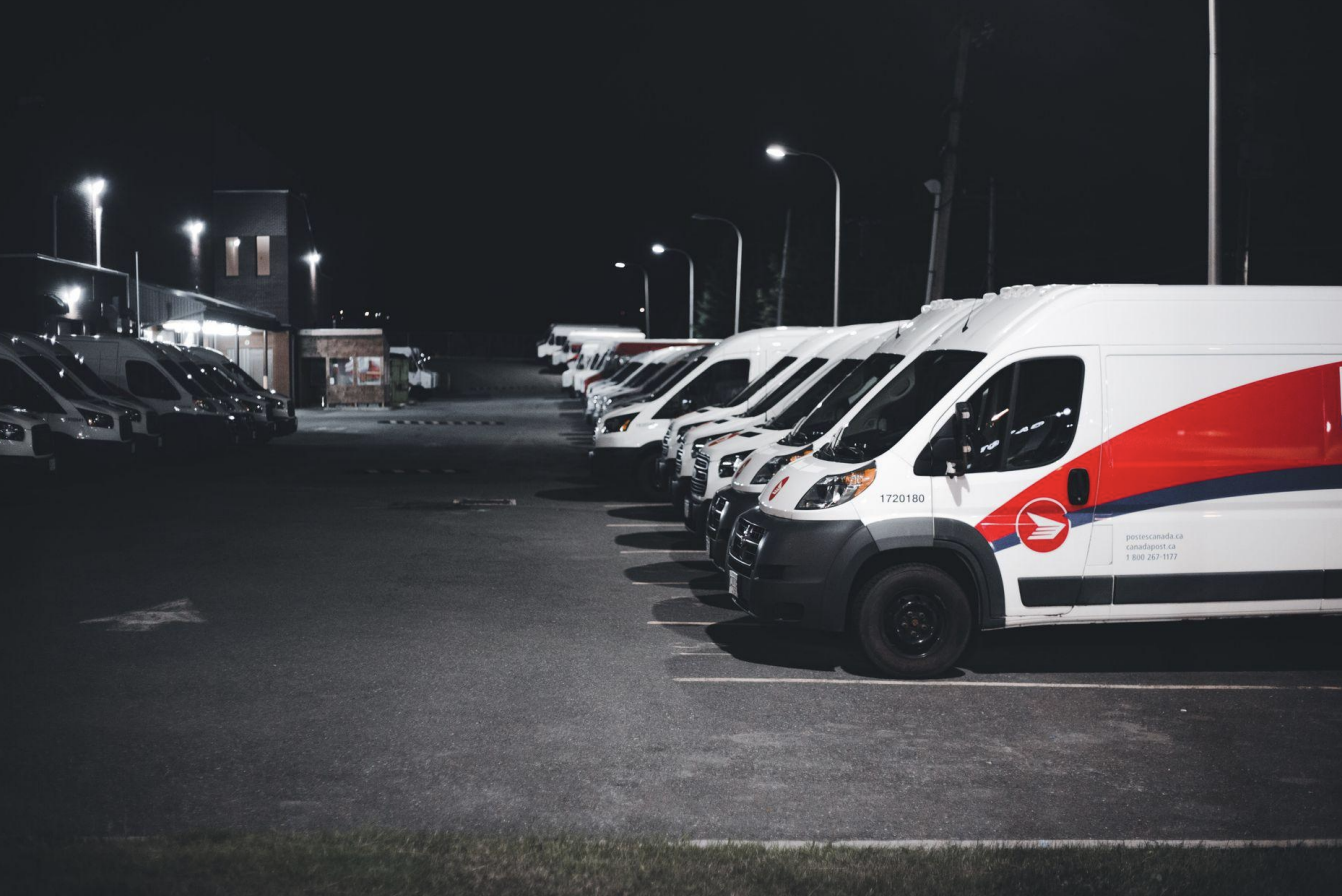
Buying commercial vehicles at auction means registering with the auctioneer, checking each vehicle's mileage, service history, MOT and finance status, setting a maximum bid, and budgeting for the buyer's premium, VAT and either transport or drive-away costs. For trade buyers, auction is one of the most efficient ways to source vans, HGVs and ex-fleet vehicles, often below dealer prices. This guide covers where to find them, what to check, what they cost, and how collection and export work.
Where to find commercial vehicle auctions
Most commercial vehicles now sell through online and webcast auctions, listed in a catalogue ahead of the sale with photographs, specifications, mileage and a fixed bidding window. You can research and bid from anywhere, which matters for trade buyers sourcing nationally rather than from one local dealer. We sell ex-fleet vans, HGVs and commercial vehicles UK-wide, frequently in mixed industrial sales alongside plant and agricultural equipment, and we catalogue lots on-site so the listing reflects the vehicle as it stands.
What sells: the main categories
Commercial vehicle auctions cover a wider range than retail car auctions. The table below sets out the categories that come up most and what most affects value on each.
- Panel vans (small to large). Typical buyer: Trades, couriers, fit-out firms. What most affects value: Mileage, service history, payload, body condition.
- Tipper and dropside. Typical buyer: Construction, landscaping. What most affects value: Body and ram condition, chassis, mileage.
- Luton and box vans. Typical buyer: Removals, logistics. What most affects value: Box and tail-lift condition, mileage.
- HGVs and trucks. Typical buyer: Hauliers, plant movers. What most affects value: MOT, mileage, service history, plating.
- Fleet cars. Typical buyer: Dealers, businesses. What most affects value: Service history, mileage, condition.
- Specialist and welfare vehicles. Typical buyer: Contractors, site operators. What most affects value: Conversion condition, hours, mileage.
Ex-fleet, ex-lease and ex-hire: what the provenance tells you
Commercial vehicles at auction usually come from a fleet, and knowing which kind sets your expectation of condition and history.
- Ex-fleet. Run by a company on a replacement cycle and usually maintained to a schedule. Mileage can be high but the servicing is typically consistent.
- Ex-lease and end-of-contract. Returned at the end of a finance term, often with full service records and a known history.
- Ex-hire. Worked hard but maintained to keep the fleet on the road, frequently with newer plates.
- Insolvency and closure. Vehicles from businesses that have stopped trading, sold to realise value.
None is automatically better. A high-mileage ex-fleet van with a full service history can be a safer buy than a lower-mileage vehicle with no records.

Before you bid: what to check on a used commercial vehicle
Commercial vehicles are sold as seen, so your checks before bidding decide what you end up with. Use the viewing where you can, or the catalogue photos and condition report.

- Mileage and service history. Cross-check the odometer against service records and MOT history. Consistent servicing matters more than a low number alone.
- MOT status. Check the current MOT and the advisory history, which flags recurring issues.
- Finance and write-off check. Run an HPI-style check on the registration for outstanding finance, write-off markers and a plate or VIN match.
- Documents. Confirm the V5C logbook, service book and, for HGVs, plating and any tachograph records are present.
- Mechanical. Look and listen for engine smoke, gearbox and clutch condition, and check for warning lights. See it running where possible.
- Body and load area. Check for corrosion, accident repairs, and the condition of the load area, tail-lift, tipper ram or box, which are expensive to put right.
How the bidding works
Register before the sale, accept the terms, and clear any identity check or deposit on higher-value vehicles. Then you can leave a maximum (proxy) bid, which the platform manages up to your limit so you often win below your ceiling, or bid live as the lot closes. Watch for anti-sniping extensions, which push back the closing time if a late bid lands, and decide your maximum before the sale rather than chasing it in the final seconds.
What a winning bid actually costs
As with all auctions, the hammer price is not the final price. Buyer's premium is added on top, often in the region of 15 to 20 percent, and VAT applies to the premium and, on many commercial vehicles, to the hammer price itself. Commercial vehicles are frequently sold VAT-qualifying, which means a VAT-registered buyer can usually reclaim the VAT, but always confirm the VAT status per lot. Then add the cost of getting the vehicle home.

In the example, an £8,000 hammer price becomes roughly £9,560 once a 15 percent premium, VAT on the premium, and a modest drive-away or transport cost are added. If the vehicle is VAT-qualifying and you can reclaim, your net cost is lower again. Bid on the all-in number, not the headline.
Driving away or transporting your vehicle
After winning, payment is taken in full before collection, usually by bank transfer within a set number of working days. With commercial vehicles you often have a choice the plant buyer does not: if the vehicle is road-legal with a valid MOT and you arrange insurance, you may be able to drive it away. If it is not road-legal, sold for export, or you are buying several, transport on a transporter or low-loader is the answer. Confirm the vehicle's road status and the collection window before you bid.
Buying for export
Commercial vehicles are a strong export category. We are EORI registered and set up for export to overseas trade buyers. On an export lot, the VAT is taken as a refundable deposit and returned once you provide valid evidence of export within the time limit set in our terms; VAT on the buyer's premium is not refundable. Whether a lot is VAT-qualifying or sold under the margin scheme affects how the VAT works, so check the status of each lot and confirm the export terms with us before you bid.
Emissions and clean air zones
For vehicles that will work in cities, emissions compliance is now part of the value. Many UK urban areas operate clean air or low emission zones that charge non-compliant vehicles daily, and the threshold for most diesel commercial vehicles is the Euro 6 standard. Before you bid on a van or truck destined for city work, check the engine's emissions standard and whether it meets the relevant zone, because a non-compliant vehicle can carry significant daily charges that change the economics. For vehicles bought purely for off-road, site or export use this matters less, but it is worth confirming either way.
Write-off categories explained
Some auction vehicles have been previously written off by an insurer and then repaired, and the category is recorded against the registration. The history check will flag it, and you should understand what it means before bidding.
- Category S. Structural damage that has been repaired. Roadworthy if properly repaired, but the marker stays and affects resale value.
- Category N. Non-structural damage repaired, such as cosmetic or electrical. Generally less significant than Category S.
- Categories A and B. For scrap or parts only; these should not be returning to the road.
A categorised vehicle is not automatically a bad buy, especially for working use, but it should be priced to reflect the marker and the resale impact. The point is to know before you bid, not to discover it later.
After you buy: getting the vehicle on the road
Budget for a little work to bring a used commercial vehicle into service. A service on collection gives you a known baseline, and it is worth checking tyres, brakes and the cam belt interval against the service history. Remove any previous operator's signwriting and livery if you are re-fleeting. Make sure the V5C is transferred into your name, arrange insurance before driving away, and for HGVs confirm the plating and any operator licence requirements that apply to you. None of this is large relative to the saving over a dealer, but it is part of the true cost.
Is buying commercial vehicles at auction worth it?
For trade buyers, usually yes. Auction prices sit below dealer retail because vehicles are sold as seen without warranty, and that discount rewards buyers who do their checks. It suits dealers, trades and fleet operators who know what to look for and can arrange their own collection and any repairs. It suits less well a buyer who needs a warranty or finance arranged at the point of sale. If you do your homework on history and condition, auction is an efficient way to buy commercial vehicles.
Building a fleet at auction
Auction suits buyers who need several vehicles, not just one. Buying multiple vans or trucks in a single sale lets you combine collection, standardise on a make or model for easier maintenance, and spread your bids across lots so you are not forced to overpay on any one. The discipline is the same as for a single purchase, set a maximum on each lot and stick to it, but the planning is different: decide how many you need, which specifications work for your operation, and your total budget before the sale, then bid selectively across the catalogue. Mixed industrial sales often list vehicles alongside plant, so a groundworks or civils buyer can sometimes source vans, a tipper and a mini-digger from one auction and collect them together.
A buyer's worked example: sourcing a fleet van
Suppose you need a panel van for a courier round. You find a three-year-old ex-fleet van in the catalogue with a stated mileage, a full service history noted, and photographs of the body and load area. You run a finance and write-off check on the registration, which comes back clear, and review the MOT advisory history, which shows only routine items. You set your maximum bid by working back from what you would pay a dealer for the equivalent, less your margin and the cost of a service on collection, then stripping out the premium, VAT where it is not reclaimable, and a modest collection cost. You leave that figure as a proxy bid. If the van sells within your limit you win it; if it runs past, you let it go and wait for the next one. That discipline, not luck, is what makes auction buying work.
Auction terms you should know
- Hammer price. The winning bid, before premium, VAT and collection.
- Buyer's premium. A percentage added to the hammer price, usually with VAT applied.
- VAT-qualifying. Sold plus VAT, normally reclaimable by a VAT-registered buyer.
- Margin scheme. VAT accounted for on the seller's margin and not separately reclaimable.
- HPI-style check. A check for outstanding finance, write-off markers and identity against the registration.
- Sold as seen. Sold in current condition with no warranty.
- Plating. The certification of weights and dimensions for HGVs.
Common mistakes to avoid
- Skipping the finance and write-off check. Always check the registration before you bid.
- Reading mileage in isolation. A full service history beats a low odometer with no records.
- Forgetting the VAT status. VAT-qualifying versus margin scheme changes your real cost. Check per lot.
- Assuming you can drive it away. Confirm MOT and road-legal status, and arrange insurance, or book transport.
- Bidding the hammer, not the total. Premium, VAT and collection are real money.
Frequently asked questions
What is the difference between ex-fleet and ex-lease vehicles?
Ex-fleet vehicles are retired from a company fleet on a replacement cycle and usually maintained to a schedule. Ex-lease vehicles are returned at the end of a finance term, often with full service records. Both can be sound buys; the service history matters more than the label.
Can I drive a vehicle away after buying it at auction?
Often yes, if the vehicle is road-legal with a valid MOT and you arrange insurance. If it is not road-legal, sold for export, or you are buying several, you arrange transport instead. Confirm the road status and collection window before bidding.
Are commercial vehicles at auction sold with VAT?
Many are sold VAT-qualifying, meaning VAT is added to the price and a VAT-registered buyer can usually reclaim it. Others are sold under the margin scheme with no reclaimable VAT. Always check the VAT status of each lot.
Should I run a history check before bidding?
Yes. Run an HPI-style check on the registration for outstanding finance, write-off markers and an identity match, and review the MOT advisory history. These checks are quick and protect you before you commit a bid.
Is buying a van at auction cheaper than from a dealer?
Usually, because auction vehicles are sold as seen with no warranty. The saving rewards buyers who check history and condition and arrange their own collection and any repairs.
Can I buy a commercial vehicle at a UK auction for export?
Yes. We are EORI registered and set up for export. On an export lot the VAT is taken as a refundable deposit and returned once you provide valid evidence of export within the time limit in our terms; VAT on the buyer's premium is not refundable. Check whether each lot is VAT-qualifying or margin-scheme before you bid.
Sources and references
- Check the MOT history of a vehicle · GOV.UK, 2026 https://www.gov.uk/check-mot-history
- VAT margin schemes (how VAT is charged on second-hand goods) · GOV.UK / HMRC, 2026 https://www.gov.uk/vat-margin-schemes
- Get an EORI number · GOV.UK, 2026 https://www.gov.uk/eori
We run online auctions of ex-fleet vans, HGVs and commercial vehicles across the UK, catalogued on-site and open to bidders anywhere. EORI registered and export-ready for overseas trade buyers.
View live auctionsUniversal Auctions Group · EORI registered and export-ready · on-site cataloguing, UK-wide collection. This article is general information for trade buyers and sellers and is not financial, tax or legal advice.
