
How to Buy Plant and Machinery at Auction in the UK: A Trade Buyer's Guide
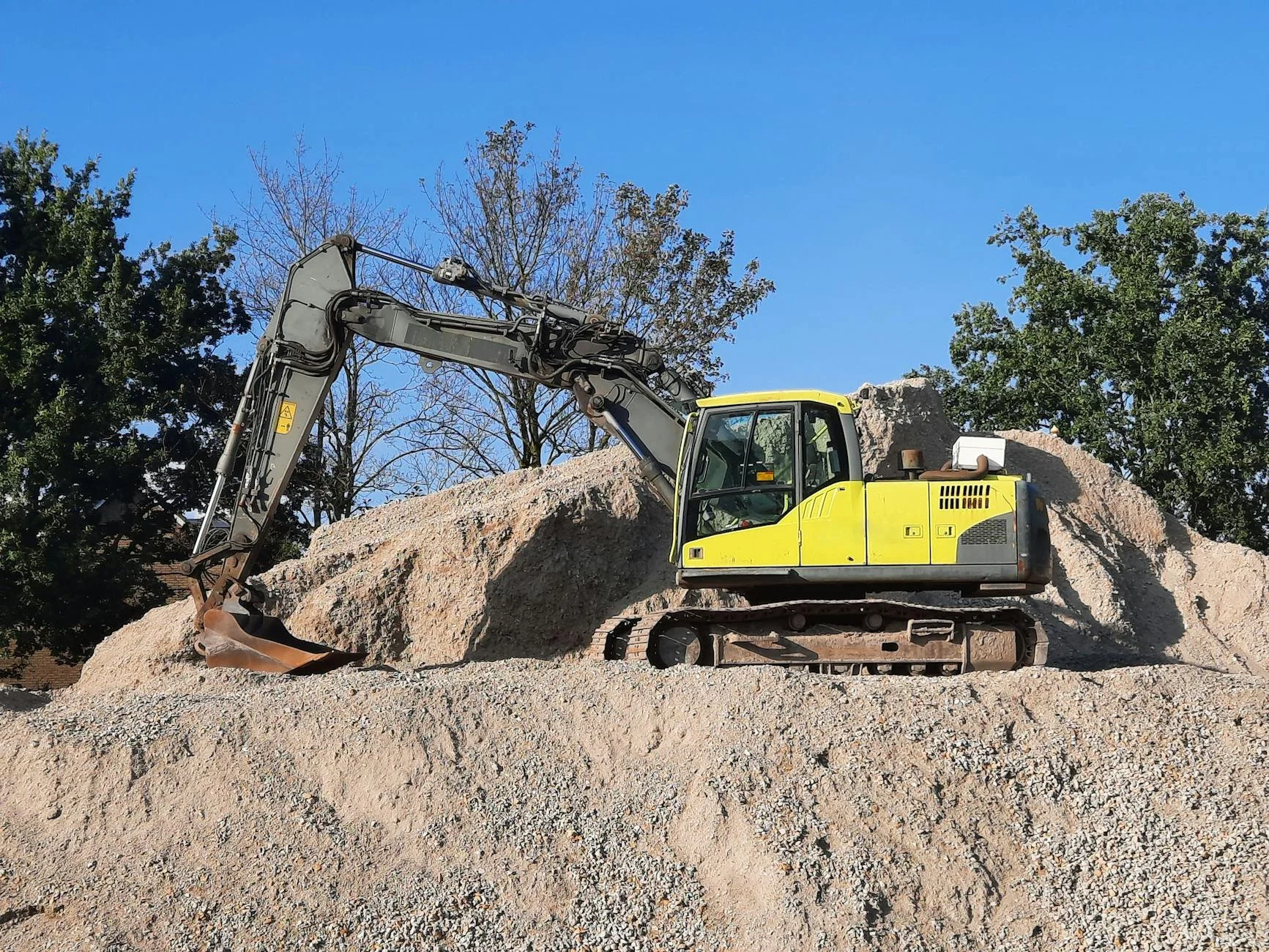
Buying plant and machinery at auction means registering with the auctioneer, inspecting lots in person or from the catalogue and condition report, setting a maximum bid, and budgeting for the buyer's premium, VAT and transport on top of the hammer price. Done well, it is one of the most cost-effective ways for trade buyers to source excavators, telehandlers, dumpers, forklifts and workshop machinery, often at a fraction of dealer retail. This guide walks through the full process, what to check before you bid, what a winning bid actually costs, and how collection and export work.
Where to find plant and machinery auctions
Most UK plant and machinery now sells through online and webcast auctions rather than purely on-site sales. Lots are listed in a catalogue ahead of the sale, with photographs, specifications and a fixed bidding window, so you can research and bid from anywhere. There are three common formats.
- Timed online auctions. Each lot has a published closing time and you bid through the platform up to that point. The most common format for industrial plant.
- Live webcast auctions. A real auctioneer runs the sale in real time and you bid online as each lot comes up, the same as standing in the room.
- On-site sales. Held at the premises, often for a full business closure where moving the assets first would not make sense.
With us, plant is the largest category by lot count, covering excavators, JCBs, dumpers, telehandlers, mini-diggers, wheel loaders and forklifts, often bundled with ex-fleet vehicles and agricultural equipment in multi-lot industrial sales. We catalogue every lot on-site, so the listing reflects the machine as it stands rather than a dealer's sales copy. The same lots are typically syndicated to marketplaces such as i-bidder and BidSpotter, but bidding with us directly keeps you closest to the catalogue detail and the viewing arrangements.
What sells: the main categories of plant at auction
Plant at auction is broad, and each type has its own wear points and buyer base. The table below covers the categories that come up most often in UK industrial sales and the one or two things that most affect value on each.
- Excavators (mini to 30t). Typical buyer: Groundworks, plant hire. What most affects value: Hours, undercarriage and track wear, hydraulic condition.
- Telehandlers. Typical buyer: Construction, agriculture. What most affects value: Hours, boom wear, tyres, attachment fit.
- Dumpers and dump trucks. Typical buyer: Earthworks, civils. What most affects value: Transmission, skip condition, hours.
- Forklifts. Typical buyer: Warehousing, logistics. What most affects value: Mast and chains, hours, fuel type (gas, diesel, electric).
- Wheel loaders. Typical buyer: Quarrying, recycling, agriculture. What most affects value: Tyres, bucket wear, transmission.
- Workshop and CNC machinery. Typical buyer: Manufacturing, fabrication. What most affects value: Power phase, tooling included, condition of ways and spindles.
If you buy across categories regularly, a multi-lot sale lets you combine collection in one trip, which can meaningfully cut the cost per machine on transport.
Where plant at auction comes from
Knowing why a machine is being sold tells you a lot about its likely condition and history. Most plant at UK auction comes from a handful of routes, and each carries a different expectation.
- Liquidation and insolvency. Assets from businesses that have closed or entered administration. Often well used but genuine working kit, sold to realise value for creditors, frequently with an independent valuation behind the sale.
- Ex-fleet and ex-hire. Machines retired from plant-hire fleets on a replacement cycle. Usually maintained to a schedule, with hours that reflect steady commercial use rather than abuse.
- Ex-lease and end-of-contract. Returned at the end of a finance or lease term, typically with service records and a known history.
- Surplus and downsizing. Working businesses selling kit they no longer need after a project or a change of direction.
None of these is automatically better or worse. Ex-hire machines can be high hours but well maintained, while a downsizing sale might offer a low-hours machine from a careful owner. Read the provenance alongside the condition report rather than assuming.
Before you bid: the inspection checklist
The single biggest difference between a good auction purchase and an expensive mistake is inspection. Plant is sold as seen, so the condition you confirm before bidding is the condition you own. Use the viewing day, or the catalogue photographs and condition report where a physical viewing is not practical.

- Hours and service history. Check the hour meter against the machine's apparent wear. Ask whether service records are available, and treat a low-hours machine that looks heavily worn with caution.
- Engine and hydraulics. Look for oil and hydraulic leaks, exhaust smoke on start-up, and play in rams and pins. Listen for knocking. Where possible, see the machine running and moving under its own power.
- Tracks, tyres and undercarriage. Undercarriage wear on tracked machines is one of the largest repair costs in plant, so inspect sprockets, rollers and track tension. Check tyre condition and matching on wheeled plant.
- Structure. Inspect the boom, dipper, bucket and chassis for cracks, weld repairs and straightness. Repairs are not always a problem, but they should be priced in.
- Attachments and keys. Confirm exactly which attachments are included in the lot, and that keys and, where relevant, a logbook, CE plate or documentation are present.
- Identity and compliance. Note the make, model, serial or VIN, and year. For road-going items this matters for registration; for lifting equipment, ask about test certification (LOLER) where relevant.
If you cannot attend, read the condition report closely and ask the auctioneer specific questions before the sale closes. A good auctioneer will answer, and the answer becomes part of your record.
How the bidding works
Online plant auctions are straightforward once you have registered, but a few mechanics decide whether you win at a sensible price. Register before the sale, which usually means confirming your details, accepting the terms, and on higher-value sales clearing an identity check or leaving a refundable deposit. Then you have two ways to bid.
- Proxy (maximum) bidding. Enter the most you are willing to pay. The platform bids on your behalf only as far as it needs to stay in front, up to your maximum, so you often win below your ceiling.
- Live bidding. Bid manually as the lot's clock runs down or as the auctioneer calls it. Bid increments are set by the platform and step up as the price rises.
- Anti-sniping extensions. If a bid lands in the final moments, the closing time extends by a short period so genuine bidders are not shut out. Plan to be available around the close, or rely on your proxy bid.

What a winning bid actually costs
The hammer price is not the final price. Two charges sit on top of almost every lot, plus the cost of getting the machine home. Buyer's premium is a percentage added to the hammer price, often in the region of 15 to 20 percent, and VAT applies to the premium and, on many lots, to the hammer price itself. Always read the lot's VAT status and the buyer's premium rate in the auction terms before bidding.

In the example above, a £10,000 hammer price becomes roughly £12,150 delivered once a 15 percent buyer's premium, VAT on that premium, and transport are included. The figures are illustrative. The point is to bid on the all-in cost, not the headline number, and to set your maximum bid by working backwards from the total you can justify.
Two VAT distinctions are worth understanding because they change what you can reclaim. A VAT-qualifying lot is sold plus VAT, and a VAT-registered buyer can usually reclaim it in the normal way. A lot sold under the VAT margin scheme has no reclaimable VAT shown, because VAT is accounted for by the seller on their margin. Check which applies per lot, especially if your costings depend on recovering the VAT.
Setting your maximum bid
Decide your ceiling before the sale, in writing, and bid to it through a proxy bid. A simple method works for most trade buyers. Start from the delivered price you would pay a dealer for the equivalent machine, or the resale value if you are buying to sell on. Subtract the margin you need and the cost of any repairs the inspection flagged. Then strip out the buyer's premium, VAT where it is not reclaimable, and transport, because those come on top of your bid. What is left is the most you can bid at the hammer. Enter that as your maximum and let the platform do the rest. The discipline of fixing the number before the adrenaline of the close is what keeps auction buying profitable.
Finance and payment
Auction purchases are generally pay-in-full before collection, usually by bank transfer within a set number of working days, so arrange funds before you bid. Asset finance is still possible on plant bought at auction, but it is arranged separately and in advance, not at the point of sale, so speak to your funder before the auction if you intend to use it. Factor the payment deadline into your planning, because missing it can mean losing the lot and, in some cases, the deposit.
Transport, collection and removal
Once you win, payment is taken in full before collection, usually by bank transfer within a set number of working days. Collection is then arranged within a stated window from the lot's location, and this is where buyers who only budgeted the hammer price get caught out. For heavy plant you are responsible for suitable transport and, where needed, loading.
- Match the transport to the machine. A mini-digger fits a plant trailer, but a 20-tonne excavator needs a low-loader and may be an abnormal load requiring notification.
- Confirm loading. Check whether the site has loading facilities or whether the machine can drive or track onto the trailer under its own power.
- Watch the deadline. Removal windows are firm. Lots left beyond the deadline can incur storage charges, so book transport as soon as you have paid.
We sell UK-wide from our London base, and collection details are part of the catalogue for each sale, so you can plan transport before you bid rather than after.
After the sale: getting the machine working
Budget for a small amount of recommissioning on any used machine. A sensible first step is a service on arrival: oils, filters, greasing, and a check of hydraulic and coolant levels, so you start from a known baseline. Source parts before you need them by noting the exact model and serial while you still have the machine in front of you at viewing. For anything with a lifting function, arrange a thorough examination under LOLER before the machine goes to work. None of this is expensive relative to the saving over retail, but it is part of the true cost of an auction machine and worth planning in.
Buying for export
If you are buying to export, the VAT treatment changes and the numbers can work in your favour. We are EORI registered and set up for export to overseas trade buyers. On an export lot, the VAT is taken as a refundable deposit and returned once you provide valid evidence of export within the time limit set in our terms; VAT on the buyer's premium is not refundable. Whether a lot is VAT-qualifying or sold under the margin scheme affects how the VAT works, so check the status of each lot and confirm the export terms with us before you bid.
Is buying plant at auction worth it?
For trade buyers, usually yes. Auction prices sit below dealer retail because you are buying as seen with no warranty, and that discount is the trade-off for doing your own inspection and arranging your own collection. It suits buyers who know what they are looking at, or who bring someone who does, and who have budgeted the all-in cost. It suits less well anyone who needs a warranty, finance arranged at the point of sale, or a machine delivered and commissioned. If you fall in the first group, auction is one of the most efficient ways to buy plant in the UK.
Auction terms you should know
A quick reference to the terms that come up most often when buying plant at auction.
- Hammer price. The winning bid amount, before premium, VAT and transport.
- Buyer's premium. A percentage added to the hammer price, payable by the buyer, with VAT usually applied to it.
- Reserve. The minimum price the seller will accept. A lot can fail to sell if bidding does not meet the reserve.
- Estimate. The auctioneer's guide to the likely selling range. A guide, not a promise.
- Sold as seen. The lot is sold in its current condition with no warranty. Inspection is the buyer's responsibility.
- Proxy bid. A maximum bid left in advance that the platform manages on your behalf up to your limit.
- VAT-qualifying. Sold plus VAT, normally reclaimable by a VAT-registered buyer.
- Margin scheme. VAT is accounted for on the seller's margin and is not separately reclaimable by the buyer.
- Provenance. The source and history of the lot, such as liquidation, ex-hire or ex-lease.
Common mistakes to avoid
- Bidding the hammer price, not the total. Premium, VAT and transport are real money. Budget for all of it before you set a maximum bid.
- Skipping inspection. Sold as seen means the risk transfers to you. Inspect, or read the condition report and ask questions in writing.
- Ignoring collection. Arrange transport and confirm access and loading before you bid on a 20-tonne machine, not after.
- Missing the VAT status. Whether a lot is margin scheme or VAT-qualifying changes what you can reclaim. Check it per lot.
- Letting emotion set the price. Decide your maximum before the sale and let the proxy bid hold the line.
Frequently asked questions
Can I buy plant at auction without viewing it in person?
Yes. Most UK plant now sells through online and webcast auctions, and lots are catalogued on-site with photographs and a condition report. If you cannot attend a viewing, read the condition report closely and ask the auctioneer specific questions before the lot closes.
What is a buyer's premium?
A buyer's premium is a percentage added to the hammer price, charged by the auctioneer on top of your winning bid. VAT usually applies to the premium. Always check the rate in the sale terms before bidding.
Is plant at auction sold with a warranty?
No. Plant and machinery is sold as seen, with no warranty. The condition you confirm before bidding is the condition you buy, which is why inspection or a careful read of the condition report matters.
How do I pay and collect after winning a lot?
Payment is taken in full before collection, usually by bank transfer within a set number of working days. Collection is arranged within the stated window from the lot's location, and for heavy plant you arrange suitable transport and loading.
Can I buy at a UK auction to export the machine overseas?
Yes. We are EORI registered and set up for export. On an export lot the VAT is taken as a refundable deposit and returned once you provide valid evidence of export within the time limit in our terms; VAT on the buyer's premium is not refundable. The treatment also differs between VAT-qualifying and margin-scheme lots, so check the status of each lot before you bid.
Where does plant sold at auction come from?
Most plant comes from liquidation and insolvency sales, retired plant-hire and ex-fleet machines, end-of-lease returns, and working businesses selling surplus kit. The provenance is usually stated, and it helps set your expectation of the machine's condition and history.
Can I get finance for plant bought at auction?
Yes, but asset finance is arranged separately and in advance, not at the point of sale. Auction lots are generally pay-in-full before collection, usually by bank transfer within a set number of working days, so speak to your funder before the sale if you intend to use finance.
Sources and references
- VAT margin schemes (how VAT is charged on second-hand goods) · GOV.UK / HMRC, 2026 https://www.gov.uk/vat-margin-schemes
- Get an EORI number · GOV.UK, 2026 https://www.gov.uk/eori
- VAT on goods exported from the UK (Notice 703) · GOV.UK / HMRC, 2026 https://www.gov.uk/guidance/vat-on-goods-exported-from-the-uk-notice-703
We run online auctions of plant, machinery, ex-fleet vehicles and business assets across the UK, catalogued on-site and open to bidders anywhere. EORI registered and export-ready for overseas trade buyers.
View live auctionsUniversal Auctions Group · EORI registered and export-ready · on-site cataloguing, UK-wide collection. This article is general information for trade buyers and sellers and is not financial, tax or legal advice.
